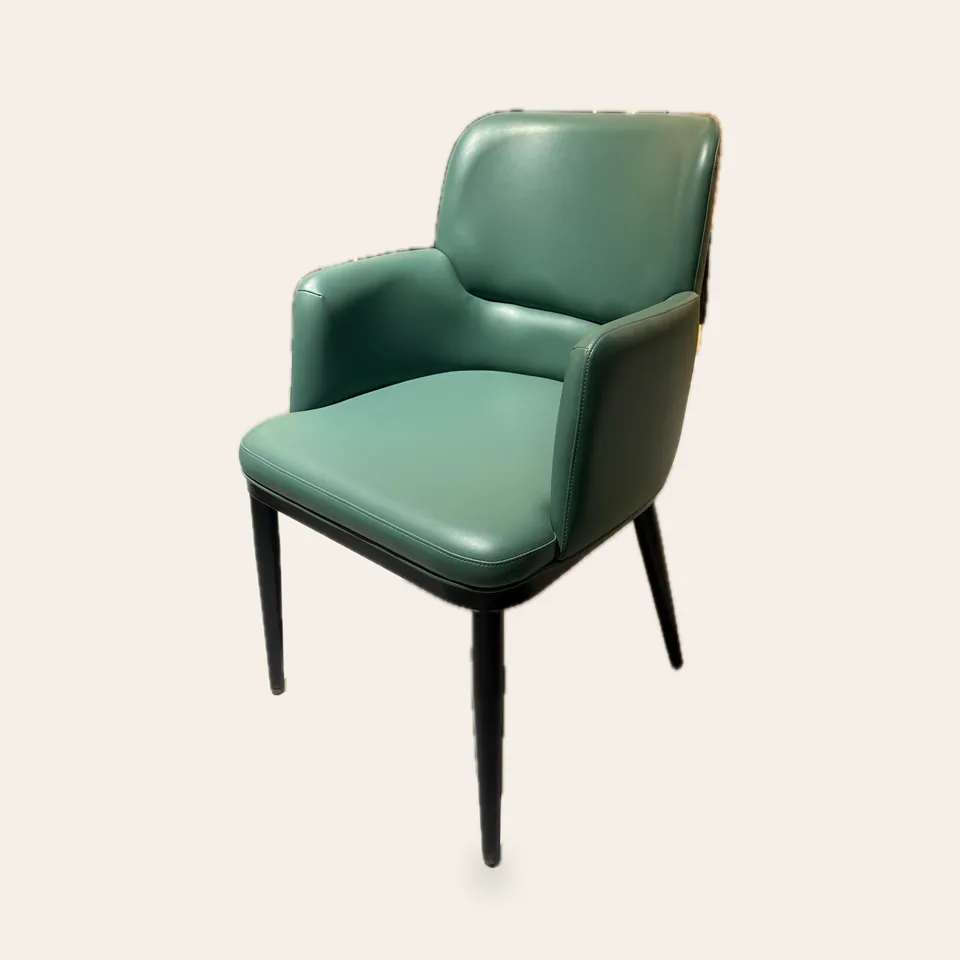
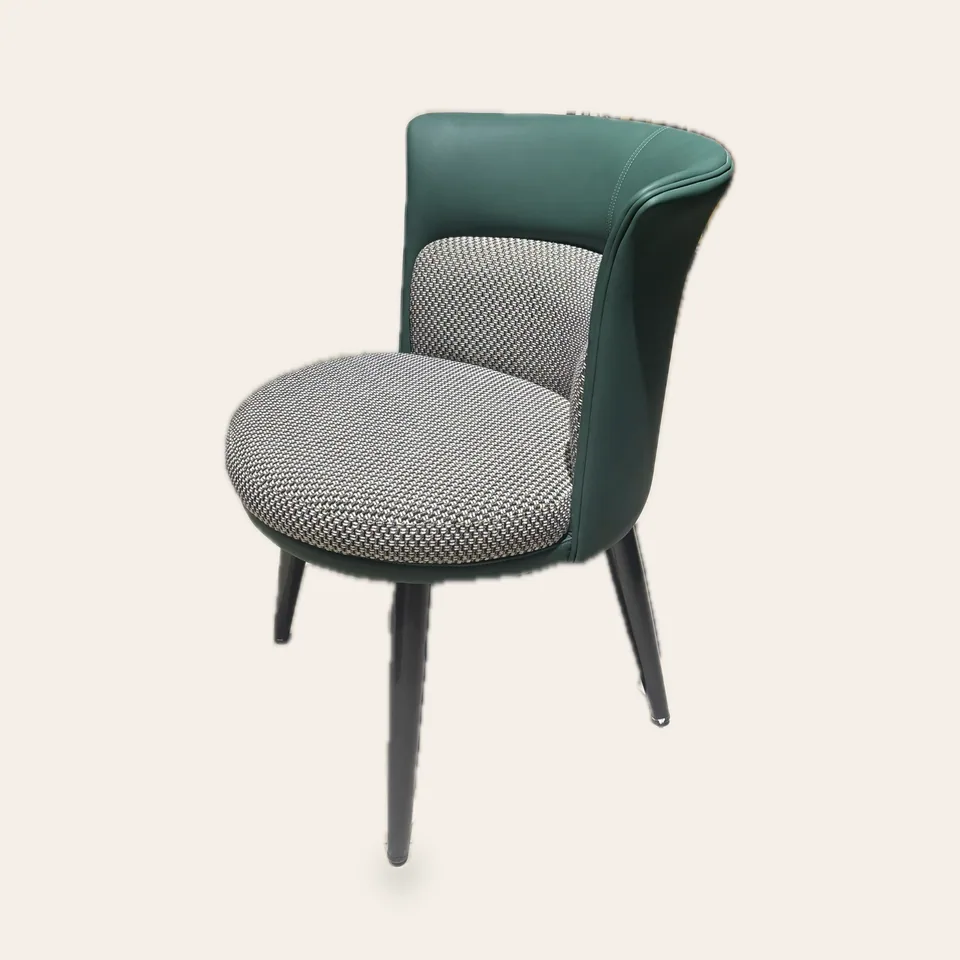
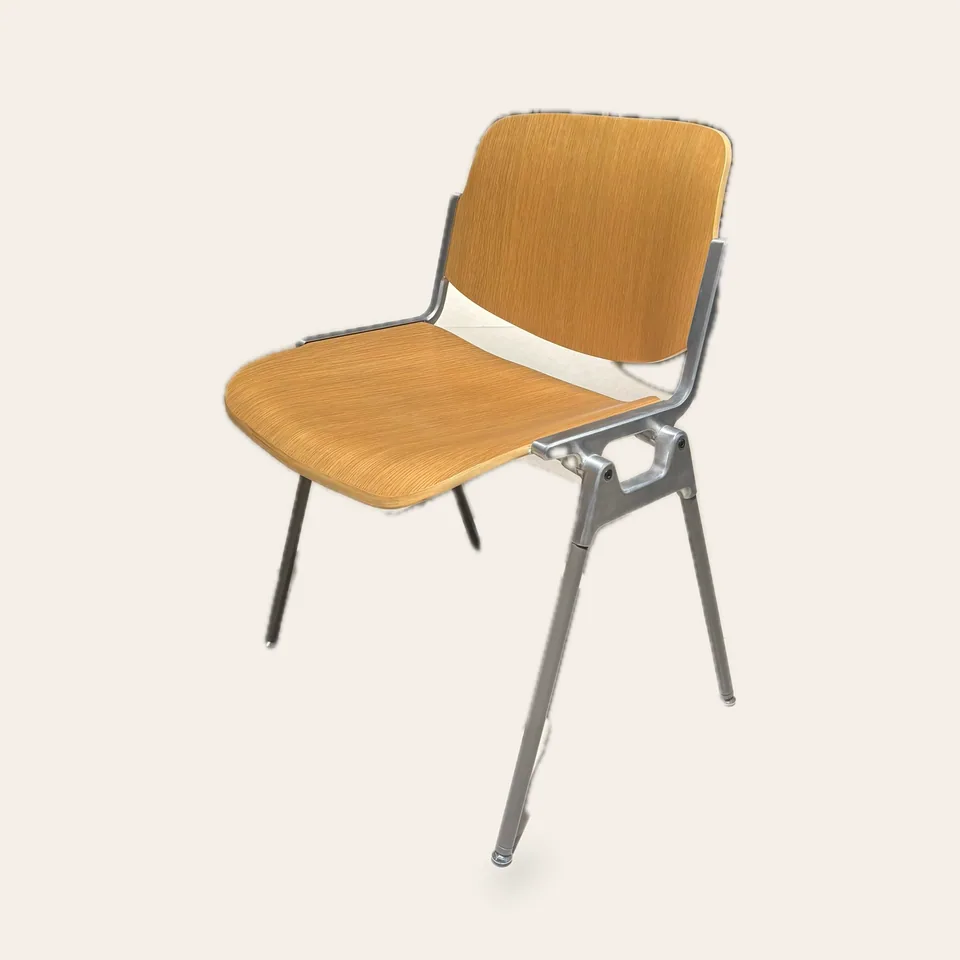
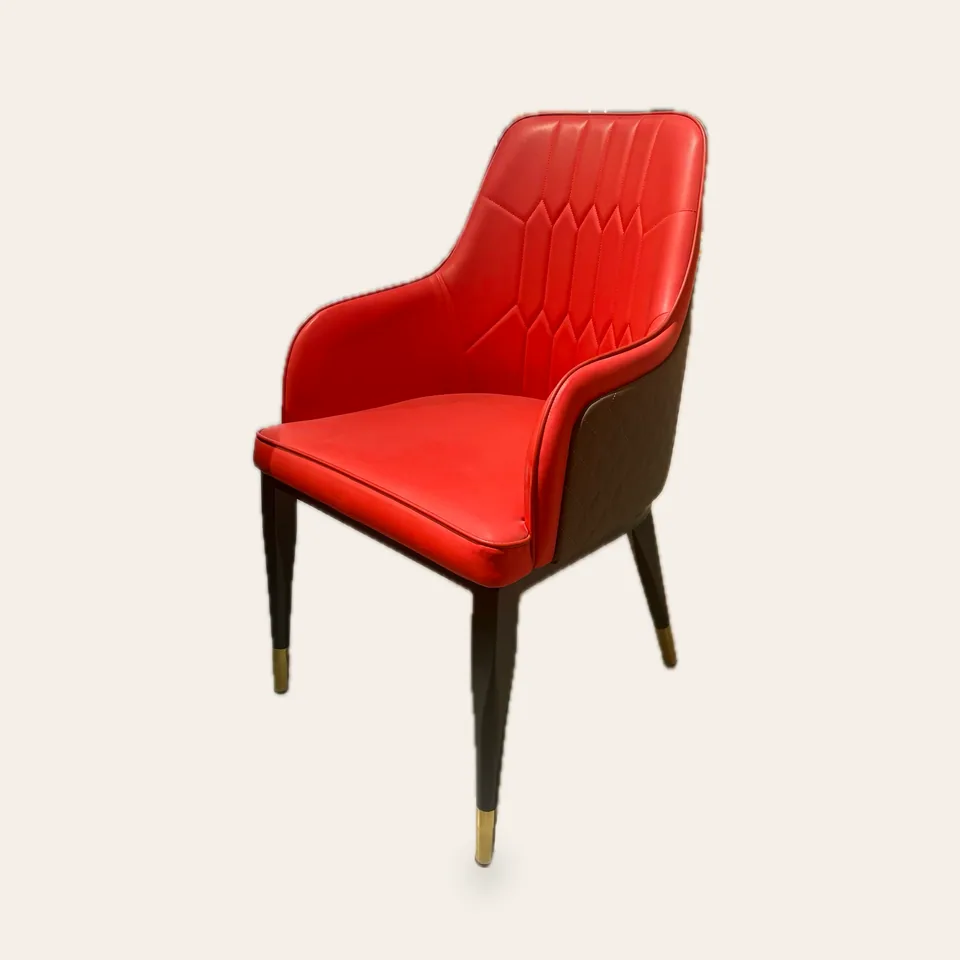
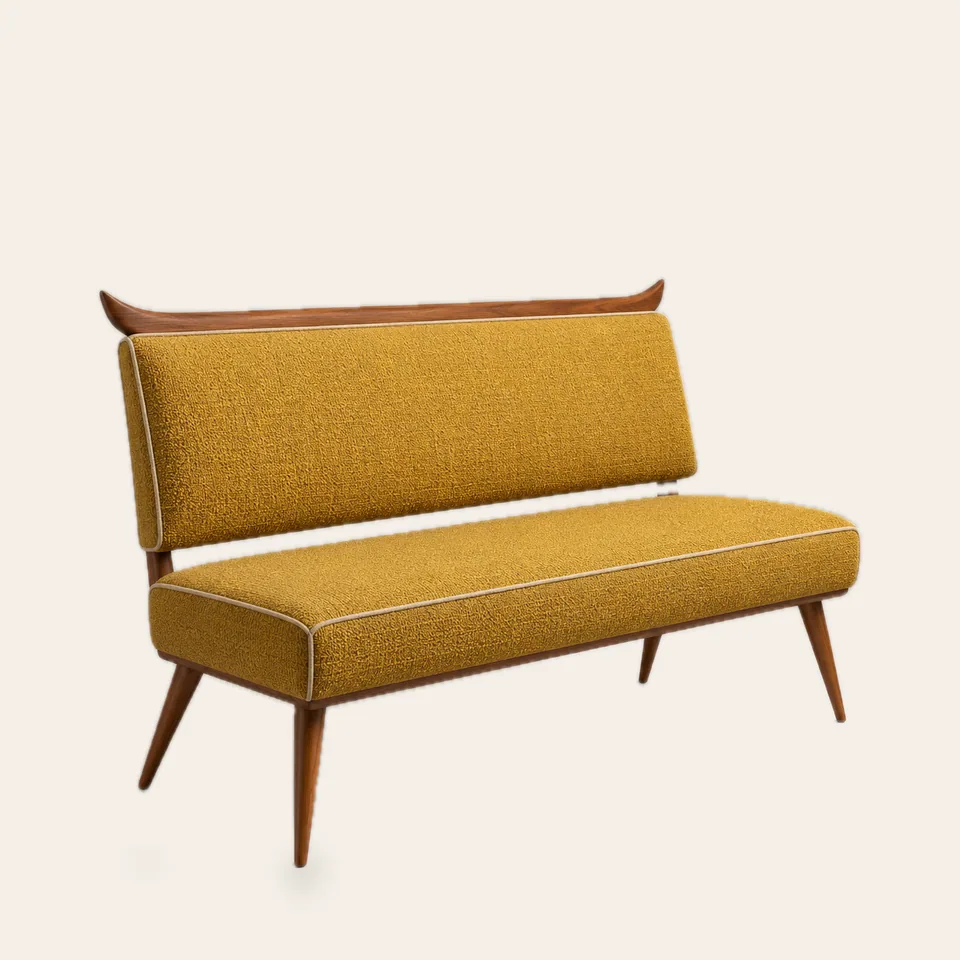
Booths seat the walls; chairs and settees fill the floor. In a retro concept the chairs carry as much of the look as the booths: molded plywood on steel legs for a mid-century coffee shop, tufted upholstered armchairs for a supper-club corner, a mustard settee with splayed legs for a lounge nook.
What we look for in a diner chair
- Frame: solid hardwood or steel with welded or glued-and-blocked joints, rated for daily commercial use.
- Seat: commercial vinyl or leather over commercial foam, or a sealed plywood shell.
- Glides: felt or nylon to suit your floor.
- Footprint: small enough to keep aisles clear; armless chairs pack tighter.
| Item | Seat height | Typical footprint |
|---|---|---|
| Dining side chair | 18 in (46 cm) | 18-20 x 20-22 in (46-51 x 51-56 cm) |
| Dining armchair | 18 in (46 cm) | 22-24 x 22-24 in (56-61 x 56-61 cm) |
| Counter stool (36 in counter) | 24-26 in (61-66 cm) | 16-18 in seat |
| Bar stool (42 in bar) | 30 in (76 cm) | 16-18 in seat |
| Settee, 2 guests | 17-18 in (43-46 cm) | 59 x 22 in (150 x 56 cm) |
Counter and bar stools can be built from drawings on request. Chairs and settees can be upholstered in the same vinyl as your booths for a continuous color story.
Settees suit waiting areas near the door. Chair frames can be finished to match booth plinths and table bases.