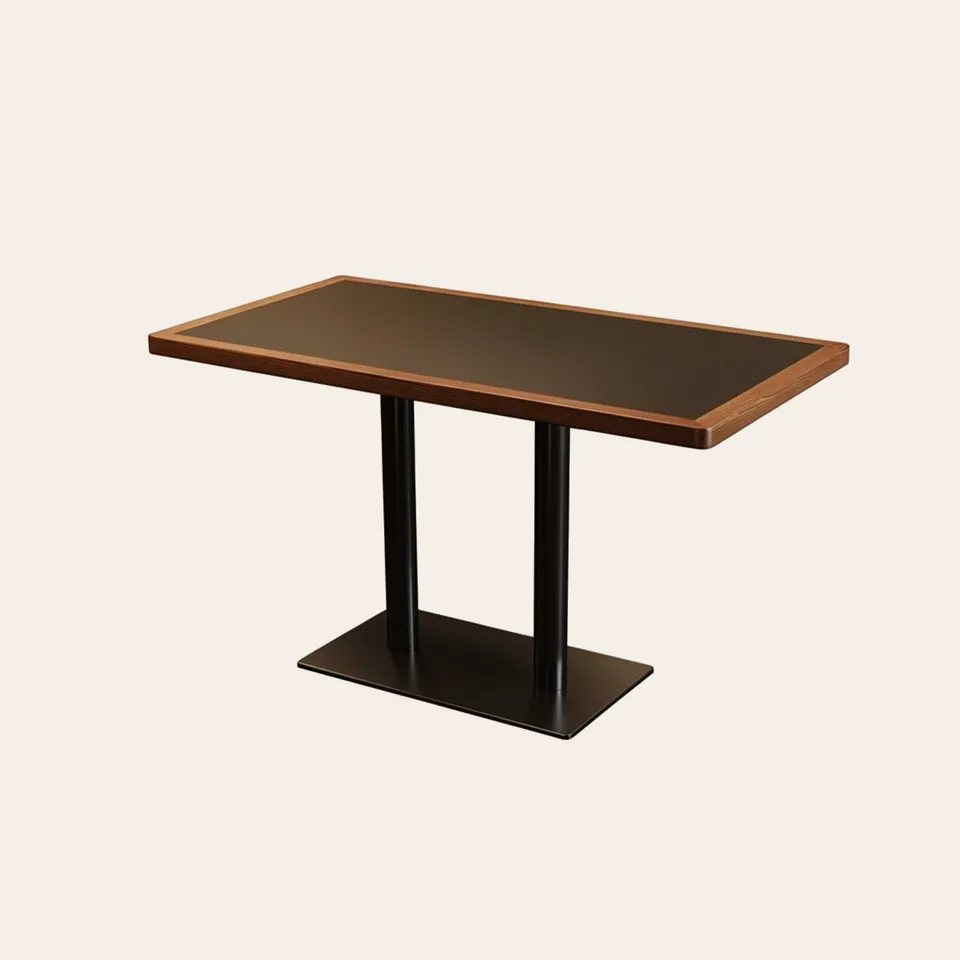
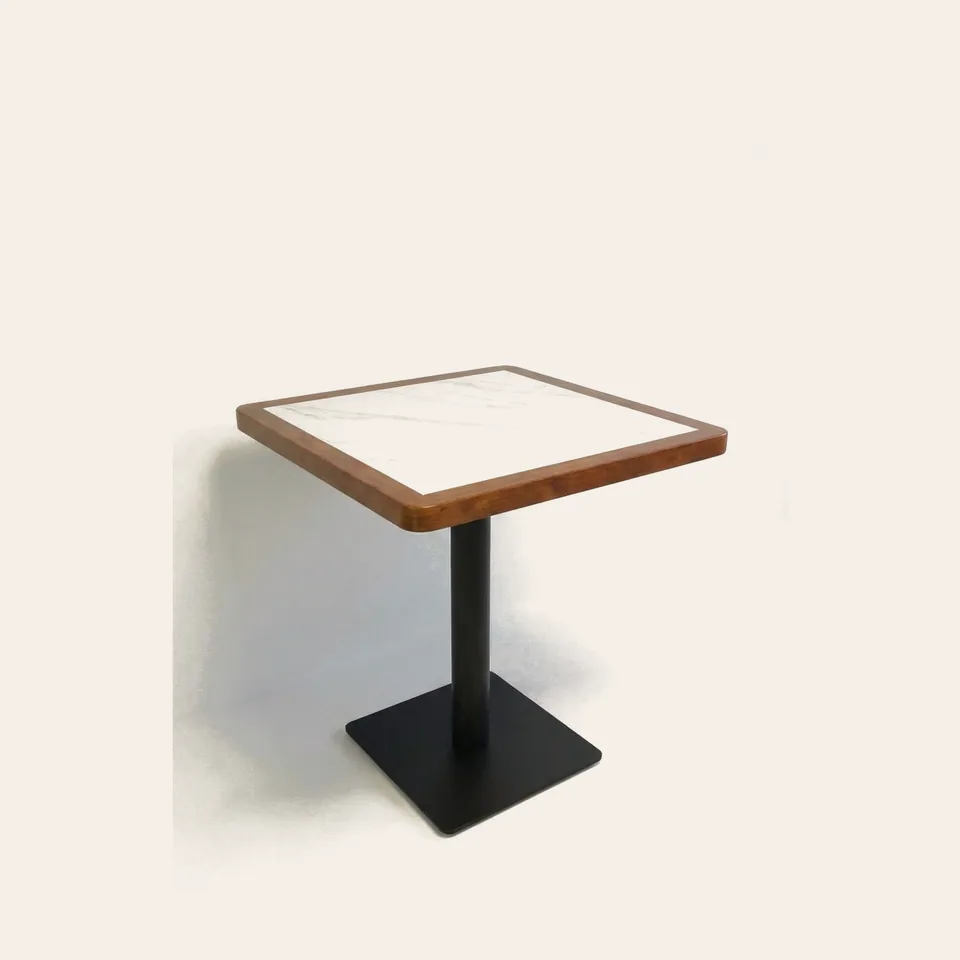
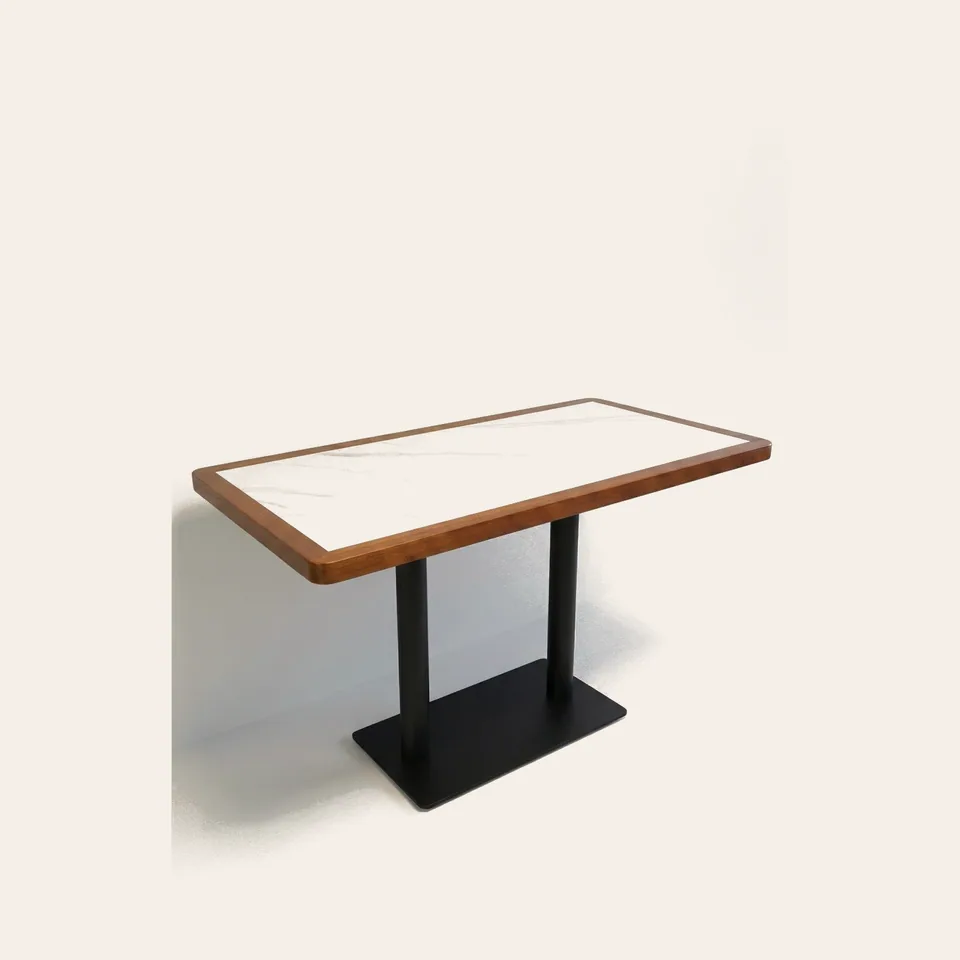
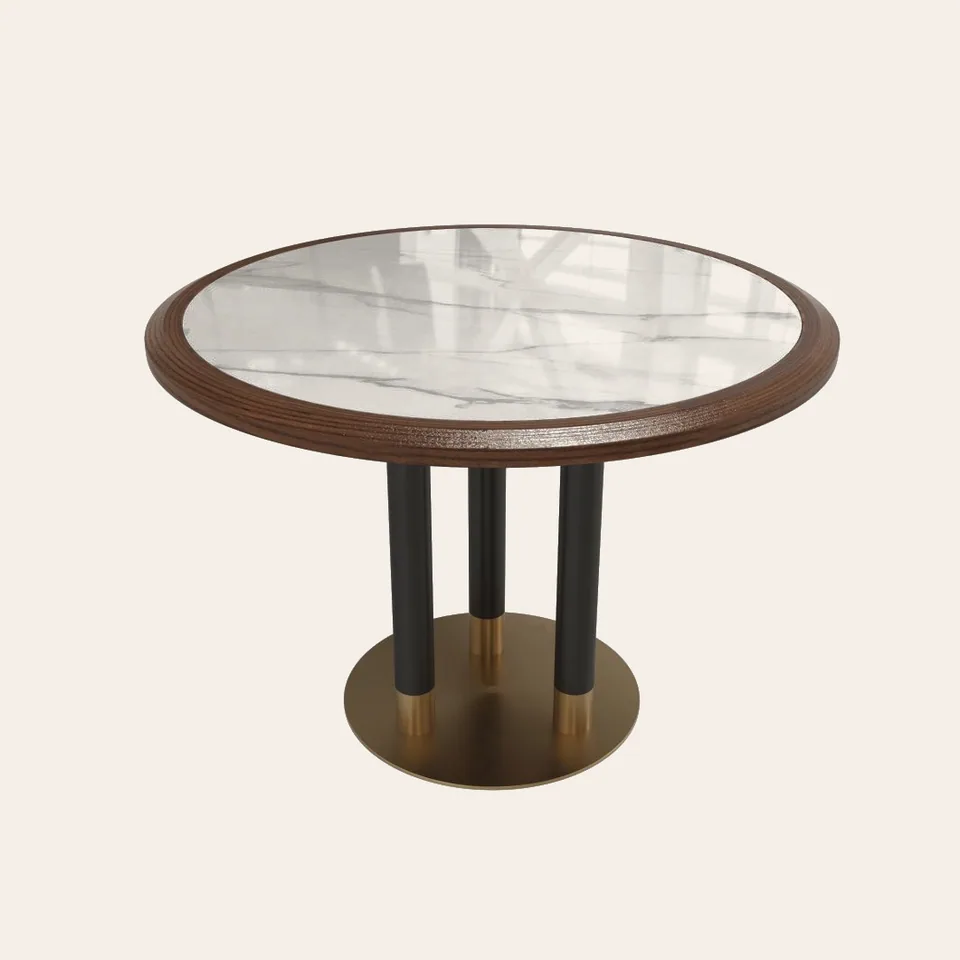
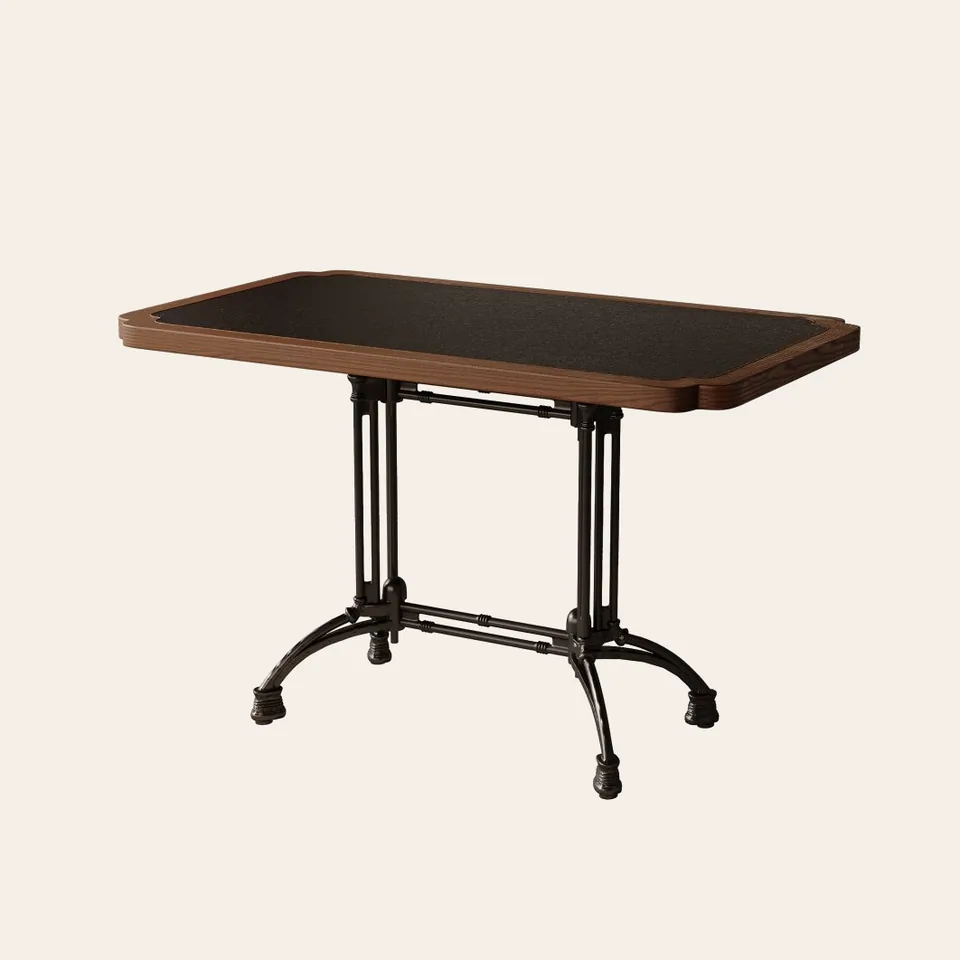
A diner table is hit by plates, trays, booster seats and knees all day. It needs a hard face, a protected edge and a base that stays out of the way of legs sliding in from a booth.
Tops
- High-pressure laminate (HPL) in solid colors, boomerang-style patterns or marble-look, on a moisture-resistant core.
- Sintered stone or porcelain for a marble look that resists rings and stains.
- Wood veneer with a commercial lacquer for warmer, mid-century rooms.
Edges
- Wrapped wood edge band (shown on many of our tables)
- Ribbed aluminum T-mold, the classic 1950s diner edge
- Polished stainless or chrome-look metal band
- Self-edge in matching laminate
| Table | Standard top | Height | Base |
|---|---|---|---|
| Booth two-top | 24 x 30 in (61 x 76 cm) | 30 in (76 cm) | Single pedestal |
| Booth four-top | 30 x 48 in (76 x 122 cm) | 30 in | Twin pedestal or T-base |
| Square four-top | 36 x 36 in (91 x 91 cm) | 30 in | Single pedestal, 22 in (56 cm) foot |
| Round four-top | 36-42 in (91-107 cm) dia | 30 in | Pedestal |
| Counter | to plan | 36 in (91 cm) | Fixed |
For booths, choose a table that overlaps the front of the seat by 3-4 in (8-10 cm) and a base that keeps clear of booth toe kicks.
Every table is made to order, so tops can match booth lengths exactly.